28 April 2026 · Palash Karamchandani
How We Direct a Brand Film: From One-Line Brief to Final Cut
Ever wondered what goes into creating a compelling brand film? From a client's initial spark of an idea to the final polished cut, P2V Labs director Palash Karamchandani pulls back the curtain on our meticulous process. Discover the craft, the technical decisions, and the on-set moments that transform a simple brief into a powerful 90-second visual story, reflecting P2V's signature editorial aesthetic from our Ahmedabad studio.
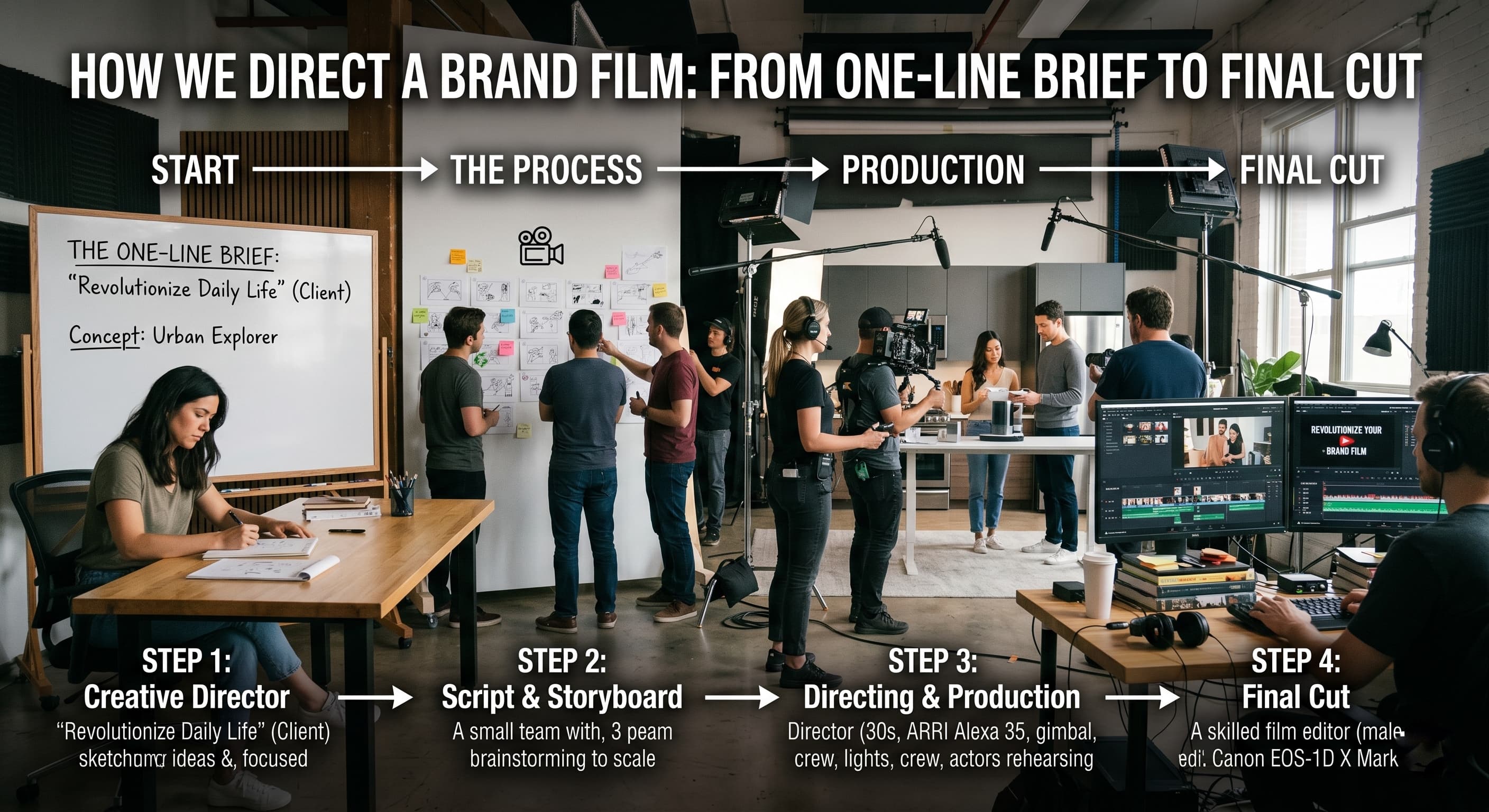
The Seed of an Idea: Unpacking the Brief
It often begins with a one-line brief – a client says, “We need a film for our new product launch,” or “Our brand needs a refresh.” My first step is always to get on a call and unpack that single line. This isn't just about logistics; it's about understanding the soul of the project. I’m listening for the emotion, the core message, and the unique identity that the client wants to convey. I ask a lot of questions:
- “What’s the single most important feeling you want viewers to walk away with?” This helps anchor the emotional core.
- “Who is this film for, and what do they already know (or not know) about your brand?” Understanding the audience shapes everything from pacing to visual style.
- “What’s the desired call to action, however subtle?” Even a 90-second brand film needs a purpose beyond looking good.
This initial discovery phase is crucial. It’s where we identify if the project is a sleek corporate film, a vibrant social reel, or a comprehensive brand visual system. Based in Ahmedabad, P2V Labs has a reputation for an editorial, restrained aesthetic – think Loewe or A24, not Times Square neon – so understanding the brand's desired tone is paramount to ensuring alignment from the outset.
From Vision to Blueprint: Treatment & Storyboard
Once I have a solid grasp of the 'why,' I move to the 'how.' This is where the initial brief transforms into a detailed visual plan. My treatment isn't just a document; it's a mood board, a visual language guide, and a narrative arc. I outline the film's concept, tone, visual style, and potential music direction. This is where I start sketching out specific shots, thinking about lens choices – perhaps a wide, atmospheric shot on a 24mm for an establishing scene, or a tighter 85mm for intimate character moments.
The storyboard takes this a step further. Frame by frame, I illustrate the key moments of the film. This isn't always about drawing perfect art; it's about conveying composition, movement, and the intended emotional beat of each scene. For a typical 90-second brand film, this might involve 20-30 frames, each with specific camera notes, lighting intentions, and character actions. This blueprint is then shared with the client via our portal at clients.p2vlabs.in, ensuring full transparency and collaborative feedback before we even think about rolling camera.
"A storyboard isn't just a sequence of images; it's the rhythm, the breath, and the unspoken language of the film before it ever sees the light of day."
Crafting the World: Location, Casting & Production Design
With the blueprint approved, the real-world build begins. Location scouting is more than just finding a pretty place; it's about finding a character that supports the narrative. Does the location offer the right light at the right time? Does its texture and architecture align with our editorial aesthetic? I've spent countless hours exploring alleys in Ahmedabad, hidden cafes, and industrial spaces, always with the film's mood in mind.
Casting, too, is an art. Sometimes, a brand film calls for professional actors who can embody a specific persona. Other times, it's about finding authentic individuals whose natural presence tells the story more powerfully. For a recent project, instead of a model, we cast a real artisan, whose weathered hands and focused gaze spoke volumes about craftsmanship – a decision that elevated the entire narrative.
Production design then ties it all together – props, wardrobe, set dressing. Every detail, no matter how small, contributes to the overall visual story. It's about building a believable, beautiful world that the brand inhabits, whether it’s for a food photography shoot for one of the 150+ restaurants we’ve worked with, or a larger product launch.
The Dance of Light & Action: Directing On Set
Shoot day is a symphony of controlled chaos. As a director and cinematographer, I'm wearing two hats, constantly balancing the artistic vision with the technical execution. The storyboard is our guide, but it's rarely a rigid script. Weather changes, light shifts, an actor delivers a line in an unexpected, brilliant way – these are moments where adaptation is key. I'm constantly making micro-decisions:
- Lighting adjustments: Is the key light soft enough? Do we need a negative fill here to create more shape? We might pivot from a planned HMI setup to harnessing natural window light if it offers a more organic, P2V-esque feel.
- Camera movement: A subtle push-in on a slider can convey intimacy; a handheld shot can add urgency. These aren't arbitrary choices; they're emotional tools.
- Performance notes: Guiding talent, ensuring their expressions and actions align with the film's emotional arc.
I remember a specific corporate film shoot where an unexpected rain shower threatened to halt production. Instead of panicking, we embraced it, using the diffused light and wet streets to create a moody, atmospheric scene that was even more impactful than our original sunny plan. These on-set moments, the improvisations born of necessity, often become the most memorable parts of the film.
The Art of Refinement: Editing & Grading
Once the footage is captured, the next phase is where the film truly comes alive: post-production. Editing is about finding the rhythm, crafting the narrative flow, and making every cut purposeful. It’s a painstaking process of selecting the best takes, assembling them into a coherent story, and then finessing the pacing until it feels just right. Sound design – music, ambient sounds, voiceovers – is integrated to elevate the emotional impact, often going unnoticed but making a profound difference.
Then comes color grading. This is where the emotional calibration happens. It’s not just about correcting exposure or white balance; it’s about establishing the film's entire mood. A slightly desaturated palette with cool tones can evoke introspection; warm, golden hues can convey comfort and nostalgia. For a recent client project, we took footage that was technically correct and, through a careful grade, transformed its feel from 'documentary' to 'cinematic editorial,' perfectly aligning with the brand's premium positioning. This is a critical step that ensures the final visual identity is cohesive and impactful, contributing to the 5M+ views our client reels have achieved.
Whether it’s a short social reel starting at ₹8,000, or a full-fledged brand film beginning at ₹35,000, or a monthly plan at ₹20,000, every project goes through this rigorous process. My role as director is to oversee this entire journey, ensuring that the initial one-line brief evolves into a powerful, cohesive visual story that resonates deeply with its audience.
Bringing a brand's story to life through moving images is a complex, multi-layered craft. It’s about merging technical precision with artistic intuition, transforming a simple idea into a compelling, unforgettable film. At P2V Labs, this is our passion, and our commitment to every client.